Oil prices have generally been trending higher over the past few months as the demand outlook for the commodity improved amid mass vaccination efforts. This week, however, benchmarks have experienced a rare moment of stability.
2021/05/26 09:35
Goldman Sachs still expects crude oil to rise to $80 per barrel by the end of the year despite reports about progress on U.S.- Iranian talks about the lifting of sanctions.
2021/05/25 10:33
Global oil demand is recovering with major economies reopening amid a cautious supply approach from OPEC+ and restraint in U.S. shale, Barclays said on Friday.
2021/05/24 16:01
(Bloomberg) --China is set to extend its dominance in the global oil market as planned tax adjustments spark a chain reaction, prompting processors to boost crude imports and raise refinery run rates.
2021/05/22 08:46
As restrictions ease across Europe, we are slowly seeing a resurgence in fuel demand for travel, not only in gasoline and diesel but also in jet fuel as travel and tourism gradually pick up.
2021/05/21 08:47
By early April 2021, striking healthcare workers demanding higher wages as they managed Argentina’s COVID-19 crisis, were blockading the sprawling Vaca Muerta shale oil and gas deposit in Neuquen. That province is at the heart of Argentina’s hydrocarbon sector - pumping over a third of Argentina’s total crude oil production and half of its natural gas.
2021/05/21 08:39
An immediate halt to oil exploration is one of the steps that need to be taken in order for the world to reach Paris Agreement climate change commitments. That’s what the International Energy Agency said in a first-of-its-kind roadmap to net zero.
2021/05/20 09:42
Crude oil prices moved further down today after the Energy Information Administration reported a crude oil inventory build of 1.3 million barrels for the week to May 14.
2021/05/20 09:15
The International Energy Agency, which has stepped up its efforts to become a major green energy supporter, appears to have forgotten the reason it was set up as an agency in the first place. In its new report “Net Zero in 2050”, the energy agency calls for no new investments in oil- and gas-related projects.
2021/05/19 10:57
The world doesn’t need any new investments in oil and gas beyond what is already approved if it hopes to achieve net-zero emissions by 2050, the International Energy Agency (IEA) said on Tuesday, adding that the road to limiting global warming to 1.5 degrees Celsius involves a rapid and radical shift away from fossil fuels.
2021/05/19 10:50
Colombia’s oil industry is yet again under considerable pressure, despite the national government in Bogota attempting to reactivate the economically crucial sector. The March 2020 oil price crash, COVID-19 pandemic, rising security risk and now significant political turmoil are weighing heavily on the oil industry’s performance. After a rough 2020 where Colombia’s five-month long quarantine lockdown sharply impacted operational activity and crude oil production, there are signs that the Andean country’s oil industry is struggling to recover. This comes after a moment of optimism in late-2020 where it appeared that Colombia’s hydrocarbon sector was on track to return to a pre-pandemic tempo of operations. The latest data from the energy ministry for Latin America’s fourth largest economy indicates that is not the case. During March 2020, Colombia pumped a daily average of 744,715 barrels of crude oil and 1.2 million cubic feet of natural gas, which is a 0.14% and 5% less than a month earlier.
2021/05/19 10:42
After having a year to forget in 2020, the energy sector has this year emerged as the best-performing of all 11 U.S. market sectors. Energy Select Sector SPDR ETF (NYSEARCA:XLE) is up 41% in the year-to-date, making the broader market S&P 500’s 11% gain appear downright anemic. Oil prices appear to have stabilized in the upper 60s, with WTI price finding support around $63 per barrel while Brent is seeing support around $65 per barrel.
2021/05/18 10:58
Oil prices have generally been trending higher over the past few months as the demand outlook for the commodity improved amid mass vaccination efforts. This week, however, benchmarks have experienced a rare moment of stability.
Goldman Sachs still expects crude oil to rise to $80 per barrel by the end of the year despite reports about progress on U.S.- Iranian talks about the lifting of sanctions.
Global oil demand is recovering with major economies reopening amid a cautious supply approach from OPEC+ and restraint in U.S. shale, Barclays said on Friday.
(Bloomberg) --China is set to extend its dominance in the global oil market as planned tax adjustments spark a chain reaction, prompting processors to boost crude imports and raise refinery run rates.
As restrictions ease across Europe, we are slowly seeing a resurgence in fuel demand for travel, not only in gasoline and diesel but also in jet fuel as travel and tourism gradually pick up.
By early April 2021, striking healthcare workers demanding higher wages as they managed Argentina’s COVID-19 crisis, were blockading the sprawling Vaca Muerta shale oil and gas deposit in Neuquen. That province is at the heart of Argentina’s hydrocarbon sector - pumping over a third of Argentina’s total crude oil production and half of its natural gas.
An immediate halt to oil exploration is one of the steps that need to be taken in order for the world to reach Paris Agreement climate change commitments. That’s what the International Energy Agency said in a first-of-its-kind roadmap to net zero.
Crude oil prices moved further down today after the Energy Information Administration reported a crude oil inventory build of 1.3 million barrels for the week to May 14.
The International Energy Agency, which has stepped up its efforts to become a major green energy supporter, appears to have forgotten the reason it was set up as an agency in the first place. In its new report “Net Zero in 2050”, the energy agency calls for no new investments in oil- and gas-related projects.
The world doesn’t need any new investments in oil and gas beyond what is already approved if it hopes to achieve net-zero emissions by 2050, the International Energy Agency (IEA) said on Tuesday, adding that the road to limiting global warming to 1.5 degrees Celsius involves a rapid and radical shift away from fossil fuels.
Colombia’s oil industry is yet again under considerable pressure, despite the national government in Bogota attempting to reactivate the economically crucial sector. The March 2020 oil price crash, COVID-19 pandemic, rising security risk and now significant political turmoil are weighing heavily on the oil industry’s performance. After a rough 2020 where Colombia’s five-month long quarantine lockdown sharply impacted operational activity and crude oil production, there are signs that the Andean country’s oil industry is struggling to recover. This comes after a moment of optimism in late-2020 where it appeared that Colombia’s hydrocarbon sector was on track to return to a pre-pandemic tempo of operations. The latest data from the energy ministry for Latin America’s fourth largest economy indicates that is not the case. During March 2020, Colombia pumped a daily average of 744,715 barrels of crude oil and 1.2 million cubic feet of natural gas, which is a 0.14% and 5% less than a month earlier.
After having a year to forget in 2020, the energy sector has this year emerged as the best-performing of all 11 U.S. market sectors. Energy Select Sector SPDR ETF (NYSEARCA:XLE) is up 41% in the year-to-date, making the broader market S&P 500’s 11% gain appear downright anemic. Oil prices appear to have stabilized in the upper 60s, with WTI price finding support around $63 per barrel while Brent is seeing support around $65 per barrel.

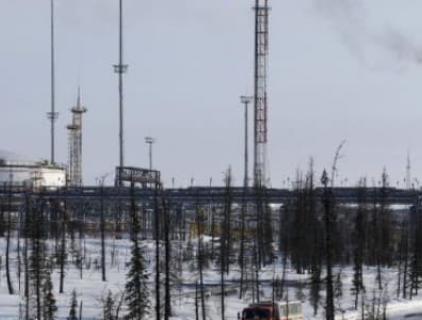
Russia Has Oil Reserves At Least Until 2080

2021/05/15 16:13
Russia’s oil reserves will last until 2080 at the current pace of annual production, Natural Resources Minister Alexander Kozlov told Russian outlet RBC in an interview this week.

Russia’s oil reserves will last until 2080 at the current pace of annual production, Natural Resources Minister Alexander Kozlov told Russian outlet RBC in an interview this week.

Russia also has natural gas reserves for another 103 years of annual production at current output levels, the minister said.

Russia’s actual oil and gas reserves could even rise if it steps up exploration in hard-to-drill areas, the minister added, noting that Russia needs to develop exploration, including in hard-to-reach areas.

Last month, Evgeny Kiselev, the head of the Russian Federal Agency for Mineral Resources, told state outlet Rossiyskaya Gazeta  that Russia has 58 years worth of oil reserves, of which 19 years to profitably pump those reserves at current levels with current technology. Advances in technology, however, will constantly push back the deadline.

Asked how long Russia would have oil reserves, Kiselev said “indefinitely.”

Oil and gas export revenues are key to Russia’s budget income. Oil price collapses like last year’s lead to belt-tightening policies despite Moscow’s insistence that it can live with $30 oil.

Russia’s production fell last year and is set for slight growth this year and next, according to government data and estimates.

After setting a post-Soviet high in oil and condensate production in 2019, Russia saw its output drop by 8.6 percent in 2020 due to the lower global demand and low oil prices, as well as the OPEC+ production cuts. Russia’s crude oil and condensate production fell in 2020 for the first time since the 2008 financial crisis and then slump in oil prices, according to government statistics.  

Last month, Russia cut its estimates for domestic crude oil, gas, and coal production for 2021 and 2022, but kept the estimates for the oil production for 2023 and 2024 unchanged. As per the latest forecasts from the Russian government, oil production this year is set to stand at 517 million tons, down from a previous estimate of 560 million tons. The projection for Russia’s oil output in 2022 was also reduced, to 548 million tons, down from earlier estimates of production of 558 million tons.